

Implants & Orthodontics
Dental Implants in Ahmedabad: Cost, Procedure, Benefits, Risks & Recovery
A missing tooth can affect more than your smile. It can make chewing difficult, affect speech, and over time may contribute to changes in the way your remaining teeth function.
Dental implants are one option for replacing missing teeth. Unlike removable dentures, an implant is placed into the jawbone and can support a dental crown, bridge, or other restoration depending on the patient’s needs.
If you are considering dental implants in Ahmedabad, understanding the procedure, expected timeline, cost factors, benefits, risks, and aftercare can help you have a more informed conversation with your dentist.
The right treatment is not the same for everyone. A dentist needs to assess your oral health, jawbone, gums, medical history, and the condition of the teeth around the missing area before determining whether dental implants are appropriate.
What Are Dental Implants?
A dental implant is a small biocompatible component, commonly made from titanium, that is surgically placed into the jawbone to replace the root portion of a missing tooth.
Once the implant has integrated with the surrounding bone, it can be used to support a dental restoration.
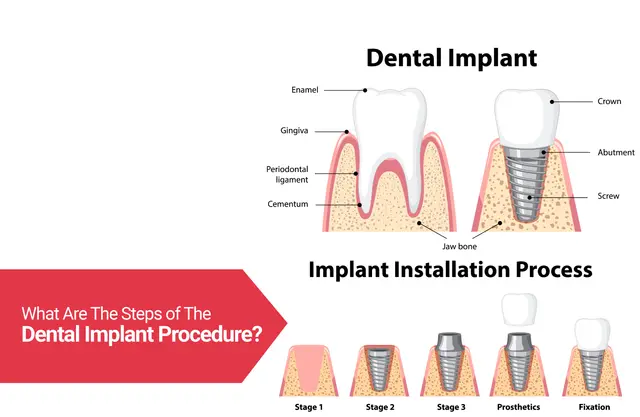
A typical implant-supported tooth consists of:
Dental Implant
The implant is placed into the jawbone and functions as the artificial tooth root.
Abutment
The abutment connects the implant to the final dental restoration.
Dental Crown
The crown is the visible tooth-like restoration placed over the implant and abutment.
The exact components and treatment approach can vary depending on the patient’s case.
Who May Be a Candidate for Dental Implants?
Dental implants may be considered for adults who have one or more missing teeth and have suitable oral and general health for the procedure.
However, being interested in implants does not automatically mean you are a suitable candidate.
What Does a Dentist Check Before Implant Treatment?
Your dentist may evaluate:
- The number and location of missing teeth
- Jawbone volume and quality
- Gum health
- Remaining teeth
- Bite and overall oral function
- Oral hygiene
- Medical history
- Smoking or tobacco use
- Certain medications and health conditions
- Whether bone augmentation or other preliminary treatment is necessary
Diagnostic imaging may also be recommended to understand the anatomy of the area being treated and plan implant placement.
Why Do People Choose Dental Implants?
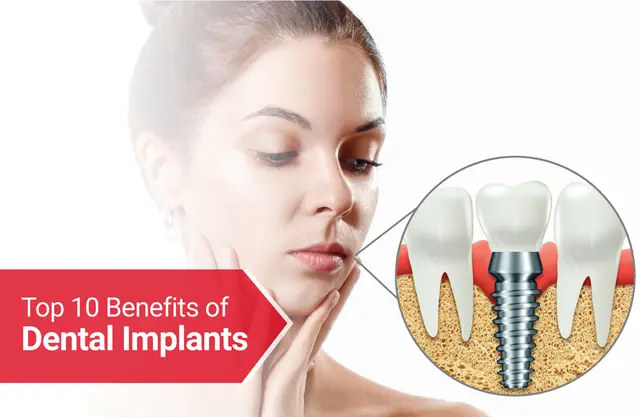
Dental implants can provide a fixed method of replacing missing teeth and may help restore chewing function and appearance.
Implants Can Replace Missing Teeth Without Relying on Adjacent Teeth
Depending on the situation, an implant-supported crown can replace an individual missing tooth without requiring the neighbouring natural teeth to be prepared as supports, as would typically be required for a conventional tooth-supported bridge.
Implants Can Support Different Types of Dental Restorations
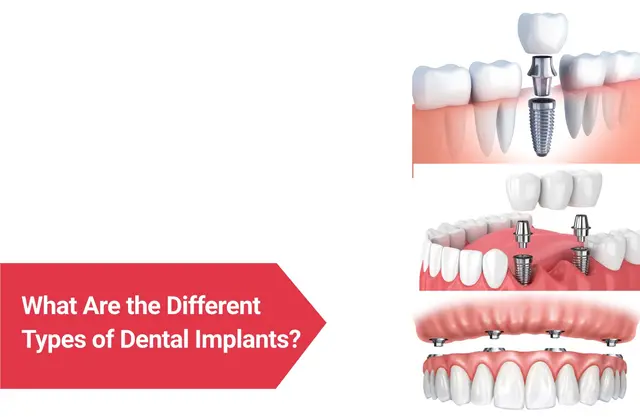
Dental implants may be used for:
- Single missing teeth
- Multiple missing teeth
- Implant-supported bridges
- Implant-supported dentures
- Certain full-arch rehabilitation approaches
The appropriate solution depends on the number of missing teeth, bone and gum condition, and overall treatment plan.
Implants Can Provide a Stable Foundation
Because the implant is anchored in the jawbone, an implant-supported restoration can provide stability compared with a removable denture.
However, the long-term success of implant treatment depends on factors such as proper treatment planning, oral hygiene, gum health, bone conditions, and regular professional maintenance.
What Is the Dental Implant Procedure?
Dental implant treatment generally involves several stages rather than one single appointment.
The exact process varies according to the patient’s condition.
Step 1: Consultation and Dental Examination
The process begins with a detailed examination.
Your dentist will assess the missing tooth or teeth, surrounding gums, remaining teeth, bite, and overall oral health.
Your dental and medical history will also be considered.
Step 2: Diagnostic Imaging and Treatment Planning
Depending on your case, dental X-rays or three-dimensional imaging may be used to evaluate the jawbone and surrounding structures.
The dentist uses this information to determine the appropriate implant position and develop an individual treatment plan.
Step 3: Addressing Existing Dental Problems
If you have untreated gum disease, active infection, tooth decay, or other oral-health problems, these may need to be addressed before implant placement.
This is important because the health of the surrounding tissues can influence the treatment process.
Step 4: Bone Grafting or Other Preparatory Treatment, If Required
Some patients may not initially have enough suitable bone to support an implant in the planned position.
In such cases, a bone-grafting procedure or another preparatory procedure may be considered.
Not every implant patient needs bone augmentation.
Step 5: Implant Placement
The dental implant is surgically placed into the jawbone.
The procedure is generally performed under local anaesthesia, although the exact approach depends on the patient’s needs and the procedure being performed.
Step 6: Healing and Osseointegration
After placement, the implant needs time to integrate with the surrounding bone.
This biological process is known as osseointegration.
The duration varies between patients and depends on factors such as the implant location, bone condition, overall health, and whether additional procedures were performed.
Step 7: Abutment and Dental Restoration
Once the implant has sufficiently integrated and the dentist determines that it is ready, the next stage involves attaching an abutment and placing the final restoration.
The restoration is designed to function and, where appropriate, resemble the surrounding natural teeth.
How Long Does Dental Implant Treatment Take?
There is no single timeline for dental implant treatment.
A straightforward case may progress relatively quickly, while patients requiring bone grafting, treatment of gum disease, multiple implants, or full-mouth rehabilitation may need considerably more time.
Factors That Can Affect Treatment Time
The timeline can depend on:
- Number of implants
- Location of the missing tooth
- Bone quality and quantity
- Need for bone grafting
- Gum health
- Healing response
- Type of restoration
- Laboratory fabrication time
- Whether temporary teeth are required
Your dentist should provide an estimated treatment timeline after evaluating your individual case.
What Is the Cost of Dental Implants in Ahmedabad?
The cost of dental implants in Ahmedabad varies from patient to patient.
There is no single price that applies to every implant case because the treatment may involve several components and procedures.
What Factors Affect Dental Implant Cost?
The total cost can depend on:
- Number of implants required
- Type and brand of implant system
- Implant placement procedure
- Diagnostic imaging
- Bone grafting, if required
- Sinus-related procedures, where clinically indicated
- Abutment
- Dental crown or other restoration
- Laboratory charges
- Complexity of the case
- Additional dental treatment required before implantation
Why Should You Avoid Choosing an Implant Clinic Based Only on Price?
A low advertised implant price may not represent the complete treatment cost.
For example, one quotation may include only the implant placement, while another may include the implant, abutment, crown, imaging, and other associated procedures.
When comparing dental implant costs, ask for a complete treatment estimate and confirm exactly what is included.
Are Dental Implants Painful?
Many patients are concerned about pain before implant surgery.
Dental implant placement is generally performed under anaesthesia, so you should not experience pain during the surgical procedure itself.
After the procedure, some patients may experience discomfort, swelling, tenderness, or bruising.
What Can Help With Post-Implant Discomfort?
Your dentist will provide specific aftercare instructions. These may include guidance regarding:
- Prescribed or recommended medication
- Eating and drinking
- Oral hygiene
- Physical activity
- Avoiding pressure on the treatment area
- Follow-up appointments
If pain becomes severe, continues to worsen, or is accompanied by other concerning symptoms, contact your dentist promptly.
What Is Recovery Like After Dental Implant Surgery?
Recovery varies depending on the extent of the procedure.
Minor implant placement may involve relatively limited recovery, while more extensive procedures can require a longer period.
What Should You Expect After Implant Placement?
Temporary swelling or tenderness can occur after surgery.
Your dentist will tell you how to care for the surgical area and when you should return for review.
Can You Eat Normally After Getting an Implant?
Your dentist will advise you about eating based on the procedure and the treatment area.
You may initially be advised to choose softer foods and avoid putting excessive pressure on the surgical site.
Follow the specific instructions provided by your dental team rather than relying on general advice.
What Are the Risks of Dental Implant Treatment?
Dental implants have a high rate of success when appropriately planned and maintained, but no surgical procedure is completely free of risk.
Potential complications can include:
- Infection
- Pain or swelling
- Implant failure
- Damage to nearby anatomical structures
- Nerve-related symptoms
- Sinus-related complications in certain upper-jaw cases
- Bone loss around the implant
- Gum inflammation around the implant
The likelihood of complications varies depending on individual circumstances.
What Can Increase the Risk of Implant Problems?
Factors such as poor oral hygiene, untreated gum disease, smoking or tobacco use, inadequate bone support, certain medical conditions, and failure to follow aftercare recommendations may affect treatment outcomes.
Your dentist should discuss relevant risks with you before treatment.
What Is Peri-Implantitis?
Peri-implantitis is an inflammatory condition affecting the tissues around a dental implant and can involve progressive bone loss around the implant.
It is one reason why implant treatment does not end when the crown is placed.
How Can You Reduce the Risk?
Good oral hygiene and regular professional dental examinations are important.
Your dentist may recommend a personalised maintenance schedule based on your implant treatment and oral-health risk factors.
How Long Do Dental Implants Last?
Dental implants are designed as a long-term tooth-replacement solution, but their longevity varies between individuals.
The implant itself and the restoration supported by it can have different maintenance and replacement requirements.
Factors affecting long-term outcomes include:
- Oral hygiene
- Gum health
- Bone health
- Smoking and tobacco use
- Bite forces
- Regular dental maintenance
- Overall health
- Quality of treatment planning
There is no honest way to guarantee that an implant will last a specific number of years for every patient.
How Should You Care for Dental Implants?
Implants should be cared for as part of your overall oral-health routine.
Brush Your Teeth Regularly
Continue regular brushing using the technique and toothpaste recommended by your dentist.
Clean Around the Implant
Food and plaque can accumulate around implant-supported restorations, so appropriate cleaning between teeth and around the restoration is important.
Your dentist or dental hygienist can show you suitable cleaning techniques and aids.
Attend Regular Dental Checkups
Routine examinations allow your dentist to assess the implant, restoration, gums, surrounding teeth, and overall oral health.
Avoid Tobacco
Smoking and tobacco use can negatively affect oral health and may increase the risk of complications around dental implants.
If you use tobacco, discuss this with your dentist before implant treatment.
Dental Implants vs Dentures: Which Is Better?
Dental implants and dentures are different approaches to replacing missing teeth.
There is no universally “better” option because the appropriate choice depends on the patient’s oral health, bone condition, preferences, budget, and treatment requirements.
| Feature | Dental Implants | Dentures |
|---|---|---|
| Support | Anchored in the jawbone | Removable appliance |
| Stability | Generally stable when properly integrated | Can move depending on fit |
| Surgery | Requires a surgical procedure | Does not require implant surgery |
| Maintenance | Requires oral hygiene and professional monitoring | Requires appliance cleaning and dental review |
| Treatment time | Usually involves multiple stages | Often can be provided more quickly |
| Suitability | Depends on bone, gums and overall health | Suitable for many patients, depending on design |
Your dentist can explain which options are appropriate for your particular situation.
Dental Implants vs Dental Bridges
A dental bridge is another common method of replacing a missing tooth or teeth.
A conventional bridge typically relies on neighbouring teeth for support, while an implant-supported restoration uses a dental implant as its foundation.
Which Option Should You Choose?
The decision depends on:
- Condition of neighbouring teeth
- Number of missing teeth
- Bone availability
- Gum health
- Oral hygiene
- Treatment preferences
- Cost
- Long-term treatment considerations
A dental consultation is necessary before deciding between an implant and a bridge.
Can Smokers Get Dental Implants?
Smoking does not necessarily mean that implant treatment is impossible, but it is an important factor to discuss with your dentist.
Smoking can affect oral tissues and healing and may increase the risk of complications.
Your dentist can assess your individual situation and explain how smoking may affect your treatment and long-term implant health.
Can Dental Implants Be Placed Immediately After Tooth Extraction?
In selected cases, an implant may be placed immediately after a tooth is removed.
However, immediate implant placement is not appropriate for every patient.
The decision depends on factors such as:
- Condition of the tooth and surrounding tissues
- Presence of infection
- Bone availability
- Gum condition
- Ability to achieve adequate implant stability
Your dentist will determine the appropriate timing after evaluating the extraction site.
Why Choose Karnavati Dental Care for Dental Implants in Ahmedabad?
For patients considering implant treatment, the most important consideration should be the quality of diagnosis, planning, treatment, and follow-up rather than a marketing claim about being the “best”.
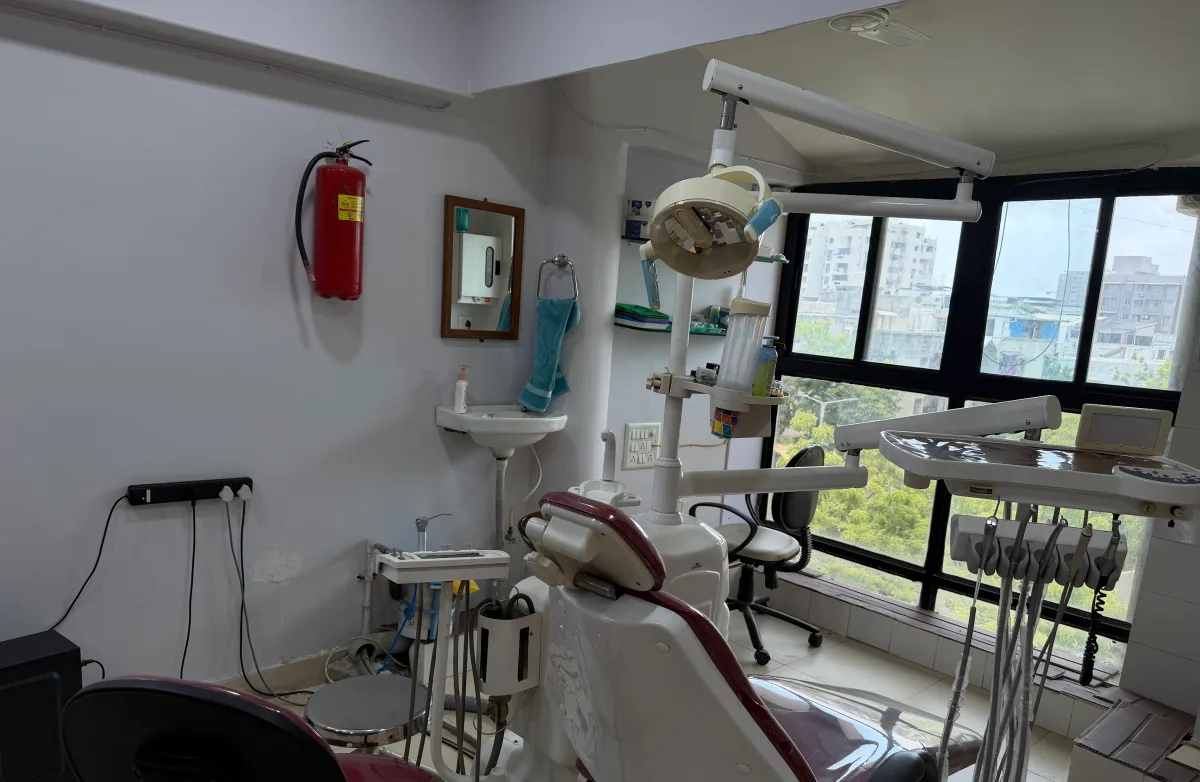
At Karnavati Dental Care, patients can discuss their missing teeth and treatment requirements with the dental team and undergo an appropriate clinical assessment before a treatment plan is recommended.
The focus should be on understanding your individual dental condition, discussing suitable treatment options, explaining the expected stages and costs, and planning appropriate follow-up care.
If you are considering dental implants in Ahmedabad, a consultation is the appropriate first step to determine whether implants are suitable for your particular case.
How to Prepare for a Dental Implant Consultation
You can make your first appointment more useful by preparing a few details beforehand.
Bring Previous Dental Records
If you have previous X-rays, scans, treatment records, or information about earlier dental procedures, take them with you.
Make a List of Your Medications
Tell your dentist about medications and supplements you currently take, as well as relevant medical conditions.
Prepare Your Questions
Write down questions about:
- Treatment alternatives
- Number of implants
- Expected treatment duration
- Recovery
- Implant system
- Crown options
- Total estimated cost
- Potential risks
- Long-term maintenance
An open discussion helps your dentist develop a treatment plan based on your actual needs.
Conclusion
Dental implants can be an effective long-term option for replacing missing teeth, but implant treatment is not simply a matter of placing an artificial tooth.
Successful treatment begins with proper diagnosis and planning. Your dentist needs to assess your gums, jawbone, remaining teeth, bite, medical history, and other factors before deciding whether implants are appropriate.
If you are considering dental implants in Ahmedabad, take time to understand the complete treatment process, expected timeline, costs, alternatives, potential risks, and long-term maintenance requirements.
Most importantly, choose treatment based on your individual clinical needs rather than price or promotional claims. A detailed consultation with a qualified dental professional is the best starting point for making that decision — you can book one here.