Treatments Explained
Dental Laser Treatment: Uses, Benefits, Procedure, Cost & Is It Safe?
The thought of dental treatment can make some people uncomfortable. The sound of dental instruments, concerns about discomfort, and uncertainty about the procedure may cause patients to postpone necessary care.
Modern dentistry offers different techniques to make certain procedures more comfortable and precise. One such option is dental laser treatment.
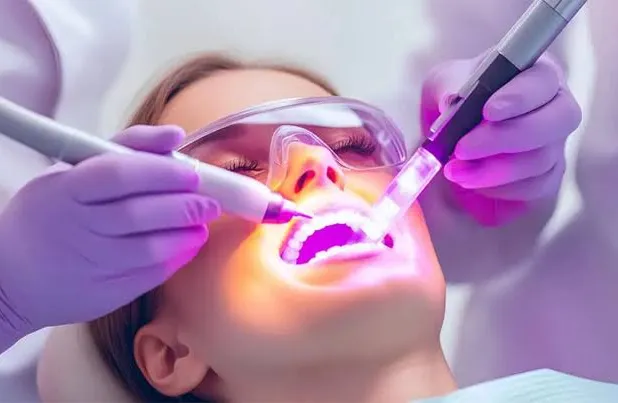
Dental lasers use focused light energy to interact with oral tissues. Depending on the type of laser and the procedure, they can be used for selected gum treatments, soft-tissue procedures, and certain other dental applications.
But does laser dentistry mean completely painless treatment? Can lasers replace traditional dental instruments? And is laser treatment suitable for every dental problem?
Let's explore how dental lasers work, their common uses, advantages, limitations, and what patients should know before choosing this treatment.
What Is Dental Laser Treatment?
Dental laser treatment is a dental procedure that uses concentrated light energy to treat or modify specific oral tissues.
The word LASER stands for Light Amplification by Stimulated Emission of Radiation.
Different dental lasers operate at different wavelengths and interact with tissues in different ways. Some are designed primarily for soft tissues, such as gums, while others can be used for selected hard-tissue applications.
In simple terms: Dental laser treatment uses specialised light-based technology to perform certain dental procedures. It may help with selected gum treatments and soft-tissue procedures, but it is not a replacement for every conventional dental technique.
How Does Dental Laser Treatment Work?
A dental laser produces a focused beam of light at a particular wavelength. When directed at the treatment area, the energy interacts with the targeted tissue.
The exact effect depends on the laser being used, its settings, and the tissue being treated.
For example:
- Some lasers can remove or reshape selected soft tissues.
- Certain lasers can interact with hard dental tissues.
- Some laser systems are used as an additional tool during periodontal treatment.
- Specific applications may help reduce bacterial levels in a treatment area.
The dentist selects the appropriate equipment and settings according to the procedure.
What Dental Problems Can Be Treated With Lasers?
Dental lasers have several applications, but their suitability depends on the condition being treated and the available equipment.
1. Gum Disease Treatment
Certain dental lasers can be used as an adjunct in selected periodontal procedures.
They may help treat specific gum tissues, but laser treatment does not automatically replace established periodontal treatments such as scaling and root planing.
The dentist first evaluates the extent of gum disease and determines the appropriate approach.
2. Gum Reshaping
Some patients have excess gum tissue or an uneven gumline that affects the appearance of their smile.
Selected soft-tissue lasers can be used to reshape gum tissue in appropriate cases.
Before cosmetic gum reshaping, the dentist must assess gum health, tooth proportions, and the underlying cause of the uneven gumline.
3. Treatment of Selected Soft-Tissue Conditions
Dental lasers may be used for certain soft-tissue procedures involving the lips, cheeks, tongue, or gums.
Depending on the condition, this may include selected procedures involving soft-tissue growths or tissue attachments.
Not every lesion should be treated with a laser. Some require examination, biopsy, or referral for further investigation.
4. Frenectomy
A frenectomy involves modifying or removing a small tissue attachment called a frenum.
In selected cases, a dental laser may be used to perform this procedure. The decision depends on the patient's anatomy and treatment needs.
5. Treatment of Cold Sores and Oral Lesions
Some laser systems have been studied or used in the management of certain oral conditions.
However, the evidence and effectiveness vary by condition and laser type. Laser treatment should not be presented as a guaranteed cure for cold sores or other oral lesions.
6. Selected Restorative Dental Procedures
Certain hard-tissue dental lasers can be used in selected applications involving enamel, dentin, or other dental structures.
However, conventional rotary instruments remain important in restorative dentistry. The choice depends on the tooth, the procedure, and the equipment available.
What Are the Benefits of Dental Laser Treatment?
When appropriately selected, laser technology may offer advantages in certain dental procedures.
1. Targeted Treatment
A dental laser can deliver energy to a specific treatment area. This allows the dentist to work on selected tissues with controlled settings.
2. Potentially Less Bleeding in Certain Soft-Tissue Procedures
Some soft-tissue laser procedures can help control bleeding during treatment because the laser interacts with tissue and small blood vessels.
The amount of bleeding depends on the procedure and the patient's individual condition.
3. May Reduce the Need for Sutures in Selected Cases
Some laser procedures may be performed without stitches, depending on the size and location of the treated area.
However, sutures may still be necessary in other procedures.
4. Potentially More Comfortable Recovery in Selected Procedures
Some patients may experience less post-operative discomfort after certain laser procedures compared with alternative techniques.
This is not guaranteed. Recovery depends on the procedure, tissue involved, and individual healing response.
5. Useful for Selected Soft-Tissue Procedures
Laser technology offers dentists another way to perform certain procedures involving gum and oral soft tissues.
The benefit comes from choosing the right technique for the right clinical situation, not from using a laser in every case.
Is Dental Laser Treatment Painful?
Dental laser treatment is not automatically painless.
Some procedures can be performed with little discomfort, while others may require local anaesthesia. The experience depends on the treatment area, the type of laser, and the nature of the procedure.
You may experience mild tenderness, swelling, or sensitivity afterward.
Your dentist should explain what level of discomfort to expect and whether anaesthesia will be required.
Is Dental Laser Treatment Safe?
Dental lasers can be used safely when the equipment is appropriate, the procedure is correctly selected, and trained dental professionals follow established safety precautions.
Important safety measures include:
- Using the correct laser wavelength and settings.
- Wearing appropriate protective eyewear.
- Protecting the patient's eyes and surrounding tissues.
- Following equipment-specific safety protocols.
- Using appropriate infection-control procedures.
- Assessing the patient's medical and dental history.
A laser is a specialised dental instrument. Its safety depends on how it is selected and used.
What Happens During a Dental Laser Procedure?
The exact process varies according to the treatment, but a typical appointment may involve the following steps.
Step 1: Dental Examination
The dentist examines the affected area and identifies the problem.
For gum disease, this may involve checking gum pockets, inflammation, bleeding, and supporting structures.
Step 2: Treatment Planning
The dentist decides whether a laser is appropriate or whether conventional treatment, a combination of techniques, or a referral would be more suitable.
Step 3: Preparation
The treatment area is prepared. Protective eyewear is used, and local anaesthesia may be administered if necessary.
Step 4: Laser Treatment
The dentist uses the selected laser system and settings to treat the target area.
The duration depends on the type and extent of the procedure.
Step 5: Aftercare Instructions
You receive instructions about oral hygiene, eating, medication if required, and follow-up appointments.
How Much Does Dental Laser Treatment Cost in Ahmedabad?
The cost of dental laser treatment in Ahmedabad varies according to the procedure and the complexity of the case.
Factors that can affect the cost include:
- The type of dental laser used.
- The condition being treated.
- The size of the treatment area.
- Whether additional dental procedures are needed.
- The number of appointments required.
- The equipment and clinical resources involved.
A gum-related laser procedure and a soft-tissue surgical procedure may have very different costs.
Ask your dentist for a treatment estimate after the examination, including any additional procedures or follow-up visits.
Are There Any Limitations or Disadvantages of Dental Laser Treatment?
Laser dentistry has useful applications, but it also has limitations.
It Cannot Replace Every Dental Instrument
Lasers are not suitable for every procedure. Conventional dental instruments remain necessary for many treatments, including numerous restorative and surgical procedures.
Not Every Patient Is a Suitable Candidate
The patient's condition, medical history, treatment area, and procedure requirements determine whether a laser can be used.
Equipment and Expertise Matter
Different lasers have different applications. The dentist must have appropriate training and use the correct equipment.
Treatment May Still Require Anaesthesia
Some laser procedures can be performed without local anaesthesia, but others require it.
Additional Treatment May Be Necessary
Laser treatment may be one part of a broader dental treatment plan. For example, managing gum disease may also require professional cleaning and ongoing periodontal maintenance.
Dental Laser Treatment vs Traditional Dental Treatment
| Feature | Laser-assisted treatment | Conventional treatment |
|---|---|---|
| Technology | Focused light energy | Mechanical dental instruments |
| Common applications | Selected gum and soft-tissue procedures | Broad range of dental procedures |
| Bleeding | May reduce bleeding in certain soft-tissue procedures | Depends on the procedure |
| Anaesthesia | May or may not be required | May or may not be required |
| Suitability | Depends on laser type and condition | Depends on procedure and clinical needs |
| Recovery | May be more comfortable in selected cases | Varies by procedure |
Neither approach is universally better. The most suitable technique is the one that safely and effectively addresses the patient's dental condition.
What Should You Do After Dental Laser Treatment?
Aftercare depends on the procedure performed.
Your dentist may recommend:
- Following specific brushing and cleaning instructions.
- Avoiding irritating or very hot foods temporarily.
- Choosing softer foods if the treated area is tender.
- Avoiding tobacco during healing.
- Taking prescribed medication as directed.
- Attending scheduled follow-up appointments.
Contact your dentist if you experience worsening pain, increasing swelling, persistent bleeding, fever, or other unexpected symptoms.
Who Should Consider Dental Laser Treatment?
Laser-assisted dental procedures may be worth discussing if you need a treatment for which laser technology is clinically appropriate.
For example, patients considering selected gum procedures, gum reshaping, or certain soft-tissue treatments may ask their dentist whether a laser-assisted approach is suitable.
The decision should be based on diagnosis, expected benefits, risks, and alternatives rather than the technology alone.
If you are exploring dental laser treatment in Ahmedabad, a consultation at Karnavati Dental Care in Vastrapur can help you understand the available options for your specific dental concern.
Final Thoughts
Dental laser technology has expanded the treatment options available in modern dentistry. It can be useful for selected gum and soft-tissue procedures and may offer benefits such as controlled tissue treatment and reduced bleeding in certain cases.
However, laser treatment is not a universal replacement for conventional dentistry. The most important step is identifying the dental problem and selecting the treatment that offers the best balance of safety, effectiveness, and long-term oral health.