

Treatments Explained
Root Canal Treatment in Ahmedabad: Cost, Procedure, Pain and Recovery
A sudden toothache can make it difficult to eat, sleep, or concentrate on everyday activities. When the soft tissue inside a tooth becomes inflamed or infected, a root canal treatment may be recommended to remove the affected tissue and preserve the natural tooth.
Root canal treatment, also called endodontic treatment, is designed to treat problems affecting the inside of a tooth while allowing the tooth to remain in the mouth.
If you are looking for root canal treatment in Ahmedabad, understanding why the treatment is needed, what happens during the procedure, how much it may cost, whether it hurts, and what recovery involves can help you make a more informed decision.
Not every toothache requires a root canal. A proper dental examination is necessary to identify the cause of pain and determine the most appropriate treatment.
What Is Root Canal Treatment?
Root canal treatment is a dental procedure used to treat infection or inflammation affecting the pulp, the soft tissue inside a tooth containing nerves and blood vessels.
When the pulp becomes irreversibly inflamed or infected, the dentist removes the affected tissue, cleans and disinfects the root canal system, and seals the space.
The tooth can then usually be restored with a suitable filling or, when necessary, a dental crown.
What Is the Dental Pulp?
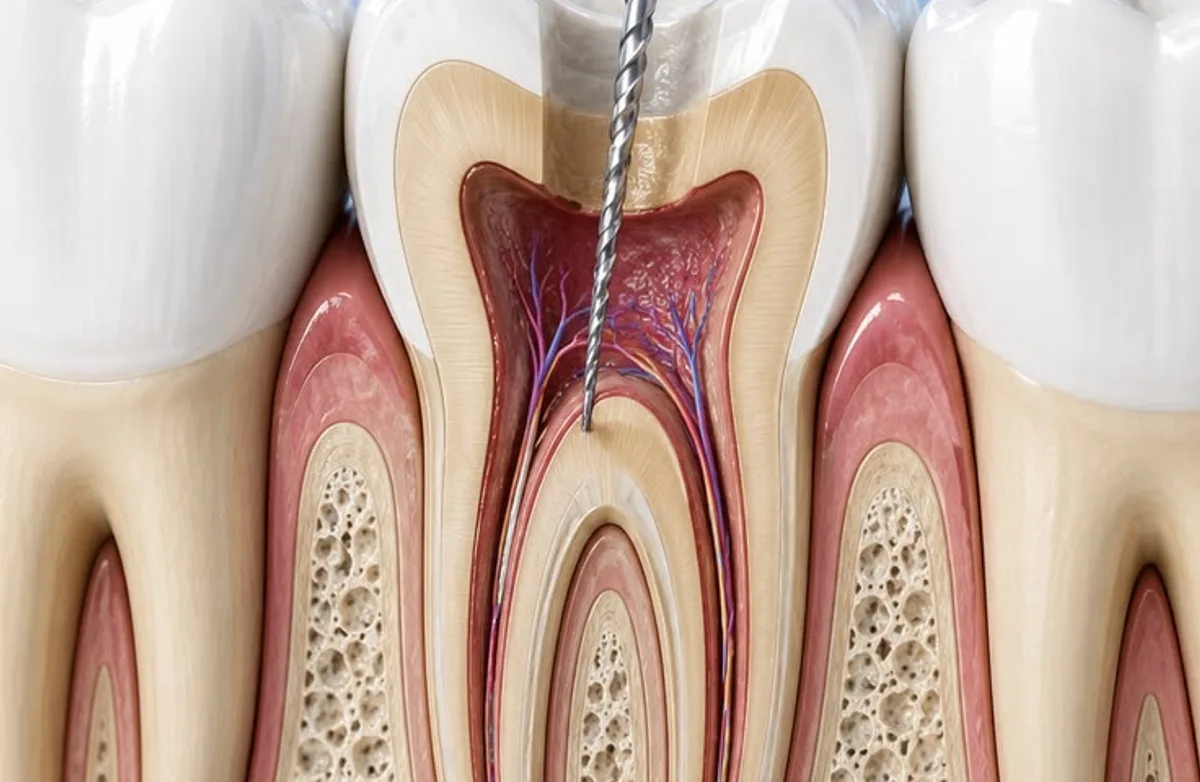
The pulp is located inside the tooth beneath the enamel and dentin.
It contains nerves, blood vessels, and connective tissue.
If bacteria reach the pulp through deep decay, cracks, trauma, or other damage, inflammation or infection can develop.
Why Does an Infected Tooth Need Treatment?
An untreated infection inside a tooth does not necessarily disappear on its own.
It can spread beyond the root and affect the surrounding tissues, potentially leading to an abscess or other complications.
Root canal treatment can remove the infected or inflamed pulp and help preserve the natural tooth when the tooth can be predictably restored.
When Is a Root Canal Treatment Needed?
A root canal may be recommended when the pulp has become irreversibly inflamed or infected.
Common causes include:
Deep Tooth Decay
A cavity that progresses deep into the tooth can eventually reach the pulp.
Cracked or Damaged Teeth
A crack can allow bacteria to enter the inner part of the tooth.
Dental Trauma
An injury to a tooth can damage the pulp, sometimes even when there is no obvious external fracture.
Repeated Dental Procedures
Repeated procedures on the same tooth can sometimes contribute to irritation or damage to the pulp.
Dental Infection
Bacteria entering the pulp can cause infection and inflammation around the root.
A dentist needs to examine the tooth and use appropriate diagnostic tests before determining whether root canal treatment is necessary.
What Are the Symptoms of a Tooth That May Need a Root Canal?
Symptoms can vary significantly.
Possible signs include:
- Persistent toothache
- Sensitivity to hot or cold
- Pain when biting or chewing
- Tenderness around the tooth
- Swelling of the gum
- A recurring pimple or drainage near the tooth
- Tooth discolouration
- Pain that appears without an obvious trigger
However, symptoms alone cannot confirm that a root canal is required.
Can a Tooth Need a Root Canal Without Causing Pain?
Yes.
Some teeth with pulp damage or infection may cause little or no noticeable pain, particularly when the pulp has become non-vital.
This is why dental examination and appropriate imaging can be important when a dentist suspects a problem.
Does Root Canal Treatment Hurt?
The idea that root canal treatment is extremely painful is one of the most common concerns patients have — see our article on root canal myths and facts.
Modern root canal treatment is generally performed under local anaesthesia, which is intended to make the procedure comfortable.
You may experience pressure or sensations during treatment, but you should not normally experience significant pain while the dentist is working on the tooth.
What About Pain After a Root Canal?
Some tenderness or discomfort can occur after treatment, particularly when biting on the tooth.
This usually settles as the tissues around the tooth recover.
Your dentist may recommend appropriate pain management depending on your situation.
If you experience severe or increasing pain, significant swelling, fever, or other concerning symptoms, contact your dentist.
How Is Root Canal Treatment Performed?
Root canal treatment generally involves several important stages.
Step 1: Dental Examination and Diagnosis
Your dentist will examine the tooth and ask about your symptoms.
Depending on the case, dental X-rays or other imaging may be used to evaluate the tooth and surrounding structures.
The dentist will determine whether the pulp is affected and whether the tooth can be restored.
Step 2: Local Anaesthesia
Local anaesthesia is used to numb the tooth and surrounding area.
This helps make the procedure more comfortable.
Step 3: Isolation of the Tooth
The tooth is isolated from saliva and the surrounding oral environment.
A rubber dam may be used during root canal treatment to help keep the working area clean and dry.
Step 4: Accessing the Root Canal System
The dentist creates a small opening in the tooth to reach the pulp chamber and root canals.
Step 5: Removing the Affected Pulp
The infected or inflamed pulp tissue is removed using specialised dental instruments.
Step 6: Cleaning and Shaping the Canals
The root canals are carefully cleaned, disinfected, and shaped so they can be properly sealed.
Step 7: Filling and Sealing the Canals
After cleaning, the canals are filled with a suitable root canal filling material and sealed.
The purpose is to prevent bacteria from re-entering the treated canal system.
Step 8: Restoring the Tooth
After root canal treatment, the tooth needs a suitable restoration.
Depending on how much natural tooth structure remains and where the tooth is located, the dentist may recommend a filling, onlay, crown, or another restoration.
How Many Visits Does Root Canal Treatment Take?
The number of appointments varies depending on the tooth and the complexity of the infection.
Some root canal treatments can be completed in a single appointment, while others may require multiple visits.
What Determines the Number of Appointments?
Factors can include:
- Tooth location
- Number and shape of root canals
- Severity of infection
- Presence of an abscess
- Complexity of the root canal anatomy
- Previous root canal treatment
- Need for additional procedures
- Patient-specific healing considerations
Your dentist can provide a more realistic estimate after examining the tooth.
How Long Does a Root Canal Treatment Take?
The duration of an appointment depends on the tooth and the complexity of the procedure.
A simple case may take less time than a tooth with multiple or unusually shaped canals.
Molars, for example, often have more complex root canal anatomy than front teeth.
Rather than relying on a fixed treatment duration, ask your dentist how long your specific case is expected to take.
What Is the Cost of Root Canal Treatment in Ahmedabad?
The cost of root canal treatment in Ahmedabad can vary significantly.
There is no single price that applies to every patient because the total treatment cost depends on the tooth, complexity, materials, diagnostic requirements, and final restoration.
Factors That Affect Root Canal Treatment Cost
The cost may depend on:
- Which tooth requires treatment
- Number of root canals
- Complexity of the canal anatomy
- Severity of infection
- Whether the tooth has been treated previously
- Diagnostic imaging
- Type of restoration required afterwards
- Need for additional procedures
Does the Cost Include a Dental Crown?
Not necessarily.
Root canal treatment and the final restoration are separate parts of the overall treatment.
Depending on the tooth and the amount of remaining tooth structure, your dentist may recommend a crown or another restoration after the root canal.
When comparing prices between dental clinics, ask whether the quotation includes the complete treatment, including the final restoration.
Why Is a Crown Sometimes Recommended After Root Canal Treatment?
A root canal-treated tooth can have a substantial amount of tooth structure removed because of decay, previous restorations, cracks, or the access required for treatment.
Teeth such as premolars and molars experience significant chewing forces, so a protective restoration may be recommended when appropriate.
Does Every Root Canal-Treated Tooth Need a Crown?
No.
The need for a crown depends on factors such as:
- Tooth location
- Amount of remaining tooth structure
- Existing damage
- Functional demands
- Risk of fracture
- Type of restoration appropriate for the case
Your dentist can determine which restoration is suitable after evaluating the tooth.
What Is Recovery Like After Root Canal Treatment?
Most patients can return to normal activities relatively quickly, but the tooth may feel tender for a short period.
What Should You Do After a Root Canal?
Your dentist may advise you to:
- Avoid chewing heavily on the treated tooth until it has been permanently restored
- Maintain normal oral hygiene
- Take medication only as directed
- Attend the recommended follow-up appointment
- Complete the final restoration as advised
Can You Eat After a Root Canal?
Your dentist will provide specific instructions based on your treatment.
If the tooth has a temporary filling, you may be advised to avoid chewing hard or sticky foods on that side until the permanent restoration is placed.
What Happens If a Root Canal Is Not Treated?
If a tooth has an untreated pulp infection, the infection can progress beyond the tooth.
Possible complications can include:
- Dental abscess
- Swelling
- Persistent pain
- Bone loss around the root
- Spread of infection to surrounding tissues
The severity and progression can vary, and some infected teeth may have few symptoms.
If your dentist has recommended root canal treatment, ask what could happen if treatment is delayed.
Can a Root Canal Save a Natural Tooth?
One of the main purposes of root canal treatment is to preserve a natural tooth that might otherwise need to be removed.
If the tooth has sufficient healthy structure and can be predictably restored, root canal treatment may allow it to continue functioning.
However, not every damaged tooth can be saved.
When Might Extraction Be Recommended Instead?
Extraction may be considered when a tooth:
- Cannot be adequately restored
- Has extensive structural damage
- Has a severe crack extending into an unfavourable part of the tooth
- Has insufficient remaining tooth structure
- Has other conditions that make predictable restoration unlikely
If extraction is recommended, ask your dentist about replacement options where appropriate.
Root Canal Treatment vs Tooth Extraction
When a tooth is badly infected, patients may sometimes wonder whether removing it is easier than undergoing a root canal.
The two approaches have different consequences.
| Root Canal Treatment | Tooth Extraction |
|---|---|
| Preserves the natural tooth | Removes the natural tooth |
| Requires cleaning and sealing the canals | Removes the entire tooth |
| Usually requires a final restoration | May require tooth replacement |
| Can preserve normal tooth function | May affect chewing if the tooth is not replaced |
| Suitable only when the tooth can be predictably restored | May be necessary when the tooth cannot be saved |
When a tooth can be predictably treated and restored, preserving the natural tooth is often an important consideration. However, the appropriate decision depends on the individual case.
Can Root Canal Treatment Fail?
Root canal treatment has a high rate of success, but treatment failure can occur.
Possible reasons include:
- Complex or missed canal anatomy
- Persistent infection
- Inadequate cleaning or sealing
- New decay
- Leakage around the restoration
- Tooth fracture
- Problems affecting the surrounding tissues
If a previously treated tooth develops symptoms again, your dentist may investigate the cause and discuss options such as retreatment, surgical treatment, or extraction depending on the circumstances.
What Is Root Canal Retreatment?
Root canal retreatment is a procedure performed on a tooth that has previously undergone root canal treatment but has persistent or recurring disease.
During retreatment, the dentist reopens the tooth, removes the previous root canal filling materials, evaluates the canals, cleans and disinfects them, and reseals them when appropriate.
Not every previously treated tooth is suitable for retreatment, so careful assessment is required.
How Can You Prevent the Need for a Root Canal?
Not all root canal problems can be prevented, particularly those caused by dental trauma or certain structural problems.
However, good oral-health habits can reduce the risk of tooth decay and some dental infections.
Brush Twice a Day
Brush your teeth regularly with fluoride toothpaste and use a technique recommended by your dentist.
Clean Between Your Teeth
Floss or use another suitable interdental cleaning method to remove plaque and food from areas your toothbrush cannot reach effectively.
Limit Frequent Sugary Foods and Drinks
Frequent exposure to sugars can contribute to tooth decay. Reducing the frequency of sugary snacks and drinks can help lower this risk.
Attend Regular Dental Checkups
Regular examinations can help identify cavities, cracks, gum problems, and other issues before they become more complicated.
Wear Appropriate Protection During Contact Sports
A properly fitted mouthguard can help reduce the risk of dental injuries during certain sports.
How Do You Choose a Clinic for Root Canal Treatment in Ahmedabad?
If you are searching for a dental clinic in Ahmedabad for root canal treatment, consider more than just the advertised price.
Check the Dentist’s Qualifications and Experience
Ask about the dentist’s qualifications and experience with root canal treatment, particularly if the tooth is complex or has been treated previously.
Ask About Diagnostic and Treatment Technology
Depending on your case, appropriate imaging and magnification or other tools may assist with diagnosis and treatment.
Ask How the Tooth Will Be Restored
A root canal is only one stage of treatment. Discuss what restoration will be placed afterwards and why.
Look for Clear Communication
Your dentist should explain the diagnosis, treatment options, expected appointments, costs, potential risks, and follow-up requirements.
Check Hygiene and Infection-Control Practices
Appropriate sterilisation and infection-control measures are essential for safe dental treatment.
When Should You See a Dentist for Tooth Pain?
Do not ignore persistent or recurring tooth pain.
You should arrange a dental examination if you experience:
- Persistent toothache
- Sensitivity that does not settle
- Pain when chewing
- Gum swelling
- Facial swelling
- A dental abscess or drainage
- A broken or cracked tooth
- Unexplained tooth discolouration
When Is Dental Pain an Emergency?
Severe facial swelling, difficulty breathing or swallowing, or rapidly spreading infection can require urgent medical or dental attention.
Do not wait for a routine appointment if you have symptoms suggesting that an infection may be spreading.
Conclusion
Root canal treatment is a commonly used procedure for treating infected or irreversibly inflamed dental pulp while preserving the natural tooth when possible.
If you have persistent tooth pain, sensitivity, swelling, or a damaged tooth, the first step is not to assume that you need a root canal — it is to get an appropriate dental examination and diagnosis.
For patients considering root canal treatment in Ahmedabad, compare dentists based on qualifications, relevant experience, diagnostic approach, treatment planning, hygiene standards, communication, cost transparency, and follow-up care.
Understanding the complete treatment — from diagnosis and cleaning of the root canals to the final restoration — can help you make a more informed decision about your dental health. If a tooth is troubling you, book an examination at Karnavati Dental Care.